|
|
THE COMPLETE COSMOS & MATTER | THE SELF-REGULATING UNIVERSE & LIFE
Thoughts from the
beginning and about a beginning...

|
|


|
|
|


|
|
|

|
|
THE ETHIC FOR SOCIETY AND ROLE OF STATE
COOPERATION AND COMPETITION begin together
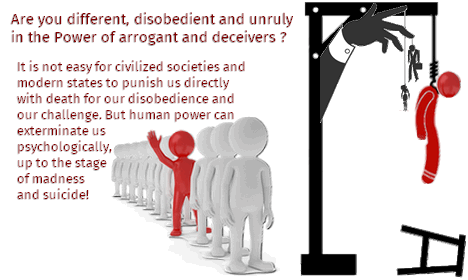
· All people perceive the same reality, are affected the same and have the same desires. · Human being is the ultimate regulator of his/her behavior and the sole responsible for his/her choices and the consequences of his/her behavior. Man can adapt to all social conditions and perform all commands and exceed the difficulties (submission). In more extreme cases, the human being was treated as if were the sole creator of its psychology and spirit and as if were acting exclusively with logic. · The deviation from the rules was considered a violation of certain natural or human laws and a dangerous (destabilizing) challenge of common ideas and suspicious characteristics of certain minorities and disobedient individuals in power. · Human relationships and partnerships are determined exclusively by people themselves and we do not have to think about the world beyond human society. · The immediately preceding views are derived from an abstract thought and are usually summarized by the words: freedom, enslavement and discipline.
The previous views and fantasies are formed when we avoid observing reality, because our priority is to act. But it proves empirically and theoretically that the right views are opposed: · Reality is not only external and people do not understand the same, nor from the time of their birth. The external reality appears (in the senses) occasional, incomplete and unstable from a specific space and in a specific time and with the contribution of thoughts, memories and selected observations. · The human being is not and has never been the sole regulator of his behavior and choices. His own regulatory capacity is directly linked to weaknesses (biological, mental and spiritual). In particular, memory and true knowledge are significantly limited, and the rule is that people are turning to their environment with enormous ignorance, wrong views and estimates and hasty thoughts. Either the environment is exclusively geophysical, or some other faces and groups in society. · In general, the deviation from the rules is also a rule for renewal, evolution and achieve new balances in new conditions and for overthrowing occasional conditions. · Man is not always fully aware of the consequences of his behavior, and the results of his action are not always in his thinking or as desires and goals. Human action is not isolated and unaffected by the characteristics and laws of the natural world and of a reality hidden in the word "luck". (...) We will understand how human relationships became complicated and differentiated people and societies - without chatting with detailed descriptions, historical and rational descriptions and issues that are not within the goals of the book - when we look at the details of things and not when remove them. Social relationships and organized society did not begun with two abstract people in a uniform and equivalent environment. Add the (cosmological) observation that the story of the whole of Earth and Life could evolve in incredible ways, from a slight diversification in the amount of matter on the surface of the planet, from a slight difference in the ratio of chemicals and rocks, from a slight difference in soil morphology and meteorological conditions.
* (A quote from the Gr book: The global Ethic of inner orientation. Subtitle: Human fantasies and lies without self-knowledge, ISBN 978-960-93-6089-0 | ©2014 | 1st Edition in GR)
Human fantasies and lies without self-knowledge... Do not tell, that you didn't know, say that you had believe!*
BIG QUESTIONS " - SHORT ANSWERS - BIG SURPRISES !
► In civilized society with the law of jungle, where one man thinks about how to deceive and how to exploit the other in order to satisfy his personal desires and with the tolerance of the State, even the education system has come to serve this purpose: deception and favor of personal interests with the power of Science. In a society of paranoid, fanatical and selfish people, where they are trained and specialized having the axiom, that "for my survival I will take advantage of your ignorance and weakness", we cannot hope ... Frivolous perception of things, credulity, habit, overestimation our abilities and limitation of reality in transactions and people's cooperation are not "realism".
|


 Early, in organized
society, some people observed the opposite orientations for the destination of life. Those who focused on the need for action to immediately
solve problems and to ensure survival, thought politically* and military, while those who believed in their abilities took initiatives and
responsibilities. In earlier times, the geographical borders were not well defined and recognized, and the international relations between countries
were not expanded and established in international law. The organization of society was simpler, with powers occasionally divided, with few
laws and shorter formulations. Some ambitious and favored utilized collaborations and imposed their opinion with weapons and not with
dialogue. Anything that prevented personal desires, family interests and collaborations was perceived it as a threat and respectively if they
facilitated them was perceived as an opportunity for exploitation. Those who maintained or gained the obedience of a group of warriors and followers did not hesitate
to kill the entire population of a city for exemplary. Only few people, with different occasions and thoughts, observed the necessary role of spirit
and rules in the human behavior and the relationship with nature, fellow humans or the gods. These few focused on the need for people to be more
restrained on their action and thought of the other end, as a moral solution: to live as withdrawn from society and lonely, with the basic action
needed to survive. This spiritual orientation leads to an introverted and quiet lifestyle and offers time for thoughts and spiritual pursuits, that
are not limited to human relationships with their problems and daily action for survival. Both opposing directions from the beginning
in human history had their own contribution to the organization of society, competitive or even contradictory to each other, often with the same
representation (as in theocratic countries).
Early, in organized
society, some people observed the opposite orientations for the destination of life. Those who focused on the need for action to immediately
solve problems and to ensure survival, thought politically* and military, while those who believed in their abilities took initiatives and
responsibilities. In earlier times, the geographical borders were not well defined and recognized, and the international relations between countries
were not expanded and established in international law. The organization of society was simpler, with powers occasionally divided, with few
laws and shorter formulations. Some ambitious and favored utilized collaborations and imposed their opinion with weapons and not with
dialogue. Anything that prevented personal desires, family interests and collaborations was perceived it as a threat and respectively if they
facilitated them was perceived as an opportunity for exploitation. Those who maintained or gained the obedience of a group of warriors and followers did not hesitate
to kill the entire population of a city for exemplary. Only few people, with different occasions and thoughts, observed the necessary role of spirit
and rules in the human behavior and the relationship with nature, fellow humans or the gods. These few focused on the need for people to be more
restrained on their action and thought of the other end, as a moral solution: to live as withdrawn from society and lonely, with the basic action
needed to survive. This spiritual orientation leads to an introverted and quiet lifestyle and offers time for thoughts and spiritual pursuits, that
are not limited to human relationships with their problems and daily action for survival. Both opposing directions from the beginning
in human history had their own contribution to the organization of society, competitive or even contradictory to each other, often with the same
representation (as in theocratic countries). However, people who focus
their minds on the action to survive and protect against external dangers and take initiatives to immediately solve problems, they usually
underestimate the decisive role of the spirit and its weakness. And those who happened to be cultivated, trained and recognized the leading
role of spirit for human life, these trainees perceive the human spirit as an instrument for action and success in the outside world. All
of them (of the external orientation of life) usually do not have the persistent insecurities that human thought causes when discovering unknown
issues and gaps of knowledge. They do not have the prepared thought of a philosopher who would prevent and delay their action by prioritizing
theoretical issues that do not appear to be closely linked to everyday life. Therefore, leaders, representatives of a group and people who
struggle for
power could not think differently, and all of them have the following views as truths (including many other arbitrary and contradictory
thoughts), justifying the application of their commands:
However, people who focus
their minds on the action to survive and protect against external dangers and take initiatives to immediately solve problems, they usually
underestimate the decisive role of the spirit and its weakness. And those who happened to be cultivated, trained and recognized the leading
role of spirit for human life, these trainees perceive the human spirit as an instrument for action and success in the outside world. All
of them (of the external orientation of life) usually do not have the persistent insecurities that human thought causes when discovering unknown
issues and gaps of knowledge. They do not have the prepared thought of a philosopher who would prevent and delay their action by prioritizing
theoretical issues that do not appear to be closely linked to everyday life. Therefore, leaders, representatives of a group and people who
struggle for
power could not think differently, and all of them have the following views as truths (including many other arbitrary and contradictory
thoughts), justifying the application of their commands: 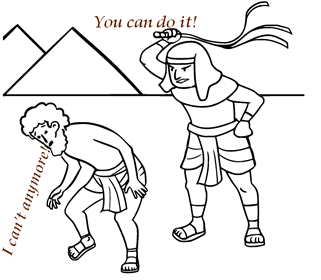

 Spiritual orientation with its universal ethic restricts reckless and ambitious actions. So it doesn't
sound pleasant. On the contrary, its refusal makes it easier for everyone to blame others, not themselves.
Spiritual orientation with its universal ethic restricts reckless and ambitious actions. So it doesn't
sound pleasant. On the contrary, its refusal makes it easier for everyone to blame others, not themselves. 

 Moral / Psychological


 The materialistic way of life is ingrained in fantasies and lies, not in self-awareness and coincides with an egocentric lifestyle and mindset. Selfishness, bias,
nonsense and paranoid spirit are other aspects of the materialistic way of life and perception.
The materialistic way of life is ingrained in fantasies and lies, not in self-awareness and coincides with an egocentric lifestyle and mindset. Selfishness, bias,
nonsense and paranoid spirit are other aspects of the materialistic way of life and perception. 

